Frequently Asked Questions On
Schooling, Learning & ICS in Sri Lanka
What makes ICS different from other private and international schools in Sri Lanka?
ICS is Sri Lanka's first formally constituted democratic school. Unlike conventional international schools that use standardised, teacher-led delivery, ICS combines a fully licensed Cambridge curriculum with personalised, student-led project-based learning.
Each child's learning path is designed for them, and students have a genuine voice in how the school is run. There are no admission fees, all materials are included in the monthly fee, and class sizes are kept very small to allow real one-to-one facilitation.
Government schools follow Sri Lanka's national curriculum from the Ministry of Education, in primarily Sinhala or Tamil medium, large class sizes, exam-focused and are teacher-directed.
ICS offers an English-medium, Cambridge-accredited curriculum delivered through personalised, project-based and democratic methods in deliberately small groups.
Crucially, ICS includes all books and materials in its fees — there are no additional tuition classes required, removing the heavy financial burden of private tuition that most Sri Lankan families carry.
How is ICS different from Sri Lanka's government and national curriculum schools?
What age groups does ICS accept?
Where is ICS located?
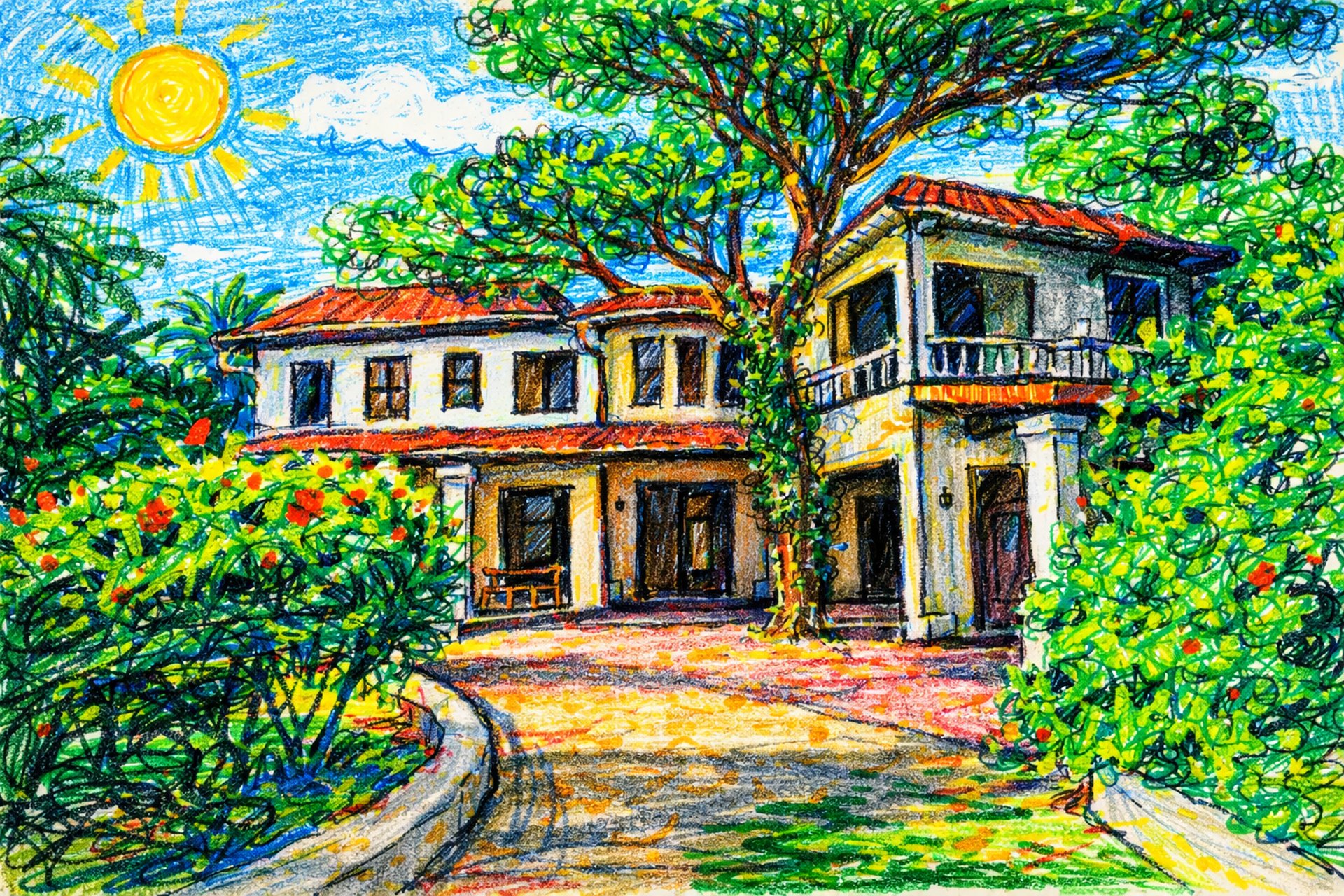
ICS is located on Gramodhya Mawatha, Kalalgoda, Pannipitiya (Thalawathugoda area), just outside central Colombo.
You can contact the school on +94726331533 or email info@theicschool.com to arrange an enrolment meeting.
ICS welcomes students from age 2 to 18 years.
The school groups learners into four stages: Magicians aged 2 to 4 years, Heroes aged 4 to 7 years, Warriors aged 7 to 14 years, and Pioneers aged 15 years and above, through the O Levels, GCSEs, IGCSEs, A Levels.
What is a democratic school and why does it matter?
A democratic school gives students an equal voice in decisions about their education and how the school is run.
Rather than being passive recipients of instruction, students are active stakeholders, participating in governance, proposing projects and shaping their own learning environment.
Research spanning over 100 years consistently shows that students in democratic settings develop stronger critical thinking, greater self-confidence, better mental health and deeper subject understanding than peers in traditional systems.
ICS is the first school in Sri Lanka to formalise this model.
Is ICS accredited and does it follow the Cambridge curriculum?
Yes.
ICS is a licensed Cambridge school. The curriculum from Pre-school through to A-Level is underpinned by Cambridge International syllabi and assessments.
This gives students globally recognised qualifications accepted by universities in the UK, USA, Australia, Canada and worldwide.
Will my child still sit Cambridge IGCSE and A-Level exams?
Yes. Because ICS is a licensed Cambridge centre, students follow the Cambridge syllabus throughout and can sit IGCSE and Cambridge A-Level examinations in the standard way.
We are, however, not limited to Cambridge exams, and have supported students in their journeys to succeed in other qualifications as per their own needs.
As a school focusing on personalised education, we do not believe in limiting a students journey in any way.
Are Cambridge qualifications recognised by Sri Lankan and overseas universities?
Cambridge qualifications (IGCSE and A-Levels) are among the most widely recognised in the world.
They are accepted for university admission across Sri Lanka's private university sector as well as by institutions globally.
Proper documentation ensures full international recognition. Students who wish to apply to universities overseas should check individual entry requirements, but Cambridge qualifications are typically accepted without additional certification.
Will my child need private tuition classes on top of ICS schooling?
No. One of ICS's core promises is that the school day is sufficient.
The personalised curriculum means children receive the individual attention they need during school hours.
The heavy reliance on private tuition in Sri Lanka's mainstream system is a direct consequence of large class sizes and one-size-fits-all teaching, problems that ICS's model is specifically designed to solve.
All materials are included in the monthly fee; there are no hidden costs.
How does ICS prepare children for an AI-driven future?
ICS explicitly designs learning to prepare students for a world where AI automates many routine tasks.
The focus is on skills AI cannot easily replicate: creativity, emotional intelligence, critical thinking, ethical reasoning, collaboration and adaptability.
Students are introduced to AI tools in age-appropriate ways, learning to use them responsibly and effectively rather than being caught off guard by them. We regularly publish thinking on the future of education and AI on its blog.
What are the school fees at ICS?
ICS is the only school in Sri Lanka to not have admission fees or termly fees. Fees are paid monthly and include all books, stationery and materials, and there are no hidden extras or additional costs.
For our current rates, please see the fees page.
Families paying 6 months upfront receive a 3% discount; a 12-month payment attracts a 5% discount.
ICS does not charge any admission or registration fees.
How do I apply to ICS?
You can apply online via the application form at theicschool.com/application-for-ics.
It is recommended to arrange an enrolment meeting first so your family can see the learning environment and ask questions before committing.
Contact ICS on +94 726 331 533 or info@theicschool.com to book a visit.
Is there an admission fee to join ICS?
No. As an ethical school, ICS does not charge any admission or registration fee.
The only cost is the monthly tuition, which already includes all materials, stationery and books.
Is there a waiting list, and when should I apply?
As ICS keeps class sizes small to protect the quality of personalised learning, spaces are limited.
Our policy is to interview a student during the month prior to joining (or hoping to join) ICS. This allows the team to have an accurate idea of the student and supports the personalised learning design.
Contact the school directly to confirm current availability for your child's age group before completing the application.
Are there any discounts or scholarships available?
ICS offers bulk payment discounts: 3% off for 6-month upfront payments, and 5% off for annual (12-month) payments.
While we do not have any scholarship opportunities at the moment, we do endeavour to work with families to explore options to enable their child to enrol at ICS.
Contact the school directly at info@theicschool.com to discuss your situation.
What is personalised education and how does it work at ICS?
Personalised education means each student's learning journey is tailored to their individual strengths, interests and pace rather than forcing every child through the same lesson at the same time.
At ICS, students work with facilitators to map out learning goals.
The Cambridge syllabus sets the academic foundation, and child-led project-based learning is the primary method for exploring and mastering it.
Is project-based learning (PBL) rigorous enough to prepare students for exams?
Yes, and the evidence is strong. For PBL to deliver academic results it must be genuinely student-led, not just group work assigned by a teacher.
ICS's approach emphasises curiosity, investigation, problem-solving, collaboration and presentation, which consistently produces deeper understanding than rote memorisation.
Because the Cambridge curriculum underpins everything at ICS, students build exactly the conceptual knowledge needed for IGCSE and A-Level exams, while also developing the 21st-century skills that employers and universities increasingly demand.
How many students are in each class?
ICS maintains deliberately small groups to make genuine personalisation possible. Small class sizes allow facilitators to know each child deeply, track progress individually, and provide the one-to-one attention that is central to the ICS model.
The Magicians group have a ration of 1 : 5 teacher to student ratio and the Heroes, Warriors and Pioneers all have 1: 12 teacher to student ratio.
How can parents support their child's learning at ICS?
ICS believes education is a genuine partnership between school, student and family.
Parents are encouraged to: Nurture curiosity and ask open questions at home. Celebrate and embrace their child's individual strengths. Foster a love of lifelong learning beyond the classroom.
What is ICS's approach to technology and screen time?
ICS takes a balanced and intentional approach to technology. Devices are available for research and project work but use is closely monitored by facilitators and limited to age-appropriate content.
Rather than banning technology or providing unlimited unsupervised access, ICS teaches students to use digital tools purposefully and critically, a skill essential for any career in an AI-driven world.
What is ICS's approach to child wellbeing and mental health?
ICS was founded on the understanding that the stress and pressure of conventional schooling causes lasting harm to children's mental and physical health.
By removing coercive elements, public ranking, excessive homework, compulsory extra tuition, and replacing them with choice, autonomy and genuine support,
ICS students develop greater confidence, resilience and emotional wellbeing. The democratic model means every child feels heard and valued, not processed through a system. Students' natural human curiosity drives their learning, which research consistently links to better mental health and long-term academic outcomes.
What does ICS mean by a "child-centred" and "inclusive" environment?
At ICS, the child is the starting point for every decision — not a syllabus to be delivered or a grade to be achieved. Child-centred means the school adapts to the child, not the other way around. Inclusive means there is no "normal" child that others must conform to; diverse thinking styles, backgrounds, abilities and personalities are all genuine assets in the ICS learning community.
ICS's mission is to be "free of any kind of systemic oppression", a commitment that extends to how students are spoken to, assessed and supported every day.
What kind of outcomes can parents expect from an ICS education?
Students at ICS develop both strong academic foundations and the personal capabilities needed to thrive beyond school.
Because learning is personalised and student-led, children build deep subject understanding while also developing confidence, independence and a genuine love of learning.
Alongside Cambridge qualifications, students consistently strengthen skills such as critical thinking, creativity, communication and collaboration.
They learn how to manage their time, take ownership of their goals and adapt to new challenges, all of which are essential for success in university and in a rapidly changing world.
Got More Questions?
Give us a call to discuss the best path for your family.